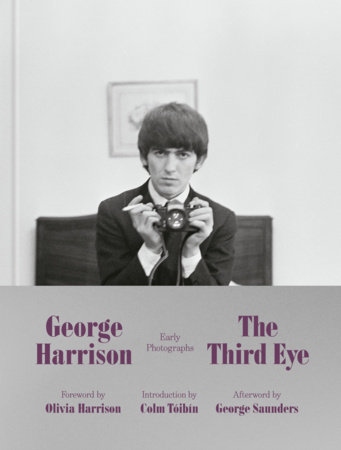
THE THIRD EYEBy George HarrisonRandom House979-8-217-15485-2350pp/$65.00/October 2026 |
|
Reviewed by Steven H Silver
During the 1960s, the Beatles were among the most photographed people in the world. Given their hectic schedules and the crowds of fans, it can often be forgotten that they were also men in their early twenties who were seeing the world for the first time. A camera figures in Ringo's sequence in the film A Hard Day's Night and in 2015, Ringo released Photograph, a collection of his pictures for the Beatles' hey day. Paul McCartney followed in 2023 with 1964: Eyes of the Storm. George Harrison's photographs have now been released in The Third Eye. While the Starr and McCartney volumes focus on specific periods, Harrison's is more wide-ranging.The volume opens with a lengthy foreword by Olivia Harrison and an introduction by Colm Toibin, both of which are illustrated with pictures of Harrison and his family, including pictures Harrison took on his pre-1963 trip to Benton, Illinois, the first Beatle to travel to the United States. he book is divided into chapters, with each chapter focusing on a specific place or period. The first includes pictures taken from 1964 through 1968 and centers of Harrison's home, Kinfauns in Surrey. Along with the introductory images taken in Benson and his first trip to New York, opening the book with these photos provides a grounding. It is an insight into the private life of George Harrison. These pictures offer a look as domestic life, including Harrison's family members, with little sign of the chaos of the world that would surround Harrison during that period.
The majority of the book does focus on 1964, which means it aligns with Starr and McCartney's books to provide an even more complete look at their first American tour (as well as stops in other countries). The chapters begin with a brief description of the circumstances behind the photos, using quotes from Harrison as well as commentary by others. The pictures and the way they share Harrison's perspective are the primary purpose of the book. Even during the height of Beatlemania, Harrison's pictures focus on individuals: The Beatles in private moments, individuals captured on the street, even his pictures of other performers focus on the individuals, not the setting or the audience.
That doesn't mean Harrison's pictures don't capture the world around them. His photos from Australia show massive crowds, although often without focus on individuals. They are also juxtaposed with pictures of the Beatles sitting on a set of stairs to their airplane in a quiet moment. Other pictures show the places they traveled, far from the streets of Liverpool, just as any other tourist would take pictures. This collection of photos reinforces the idea of Harrison as "the Quiet Beatle," his pictures showing a calm in the storm that was taking place around him.
The final chapter of the book, "Friar Park, Oxfordshire," bookends the first, showing photos of the home he moved into near the end of his time with the Beatles. Photos of his home, his family, and his goats, are similar to those that open the book in Kinfauns, but the grandeur of the house and its lands show that even if he is still the person who looks for quiet moments, he is in a position to provide for himself and his family. The bridges, swans, and sculpture replacing the graffiti and cars from the earlier period, but still representing their owner and photographer. More than Starr and McCartney's books, Harrison's photos show as much about him as they do of their subjects.
| Purchase this book |
|
|
|
Hardcover |
Kindle |