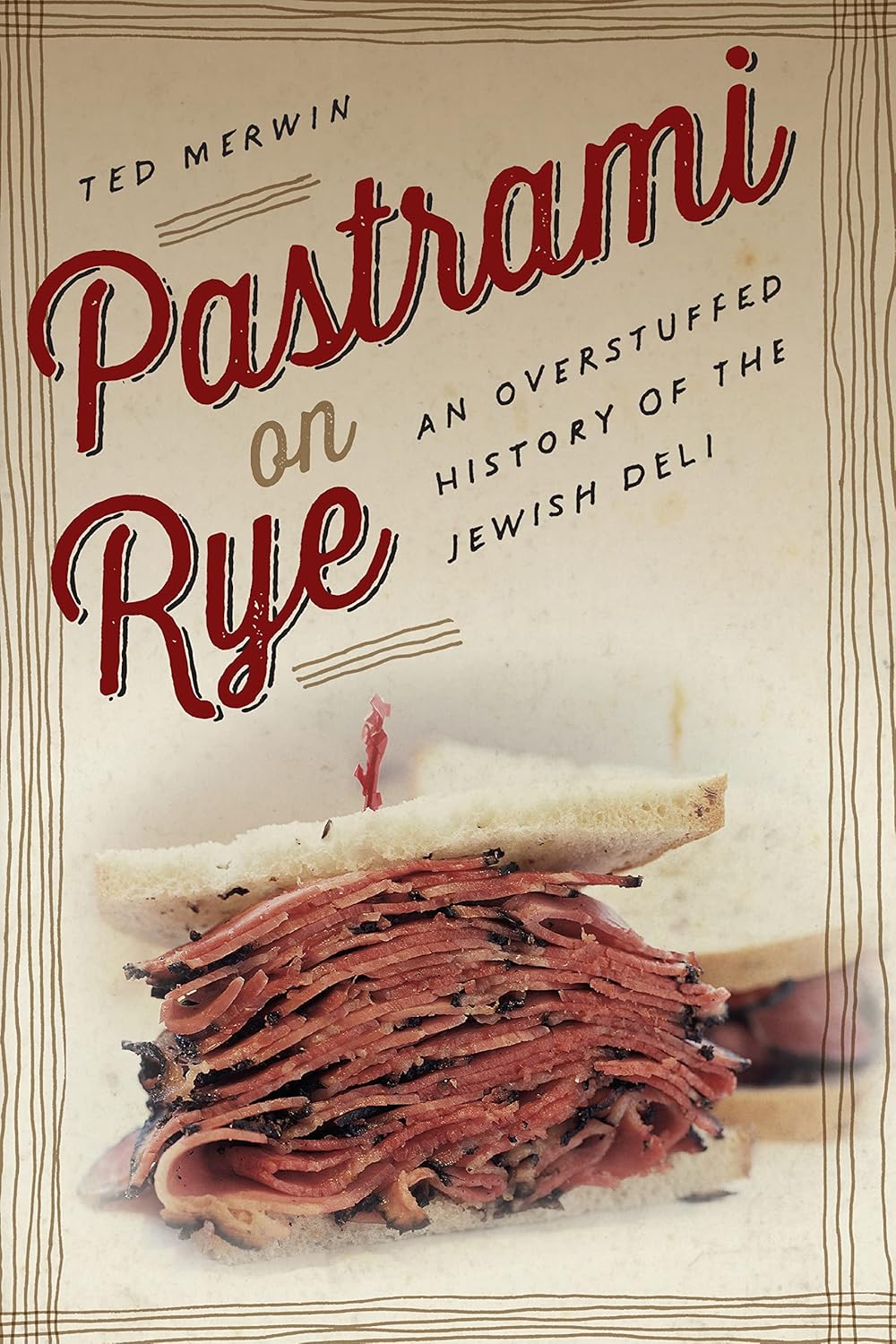
PASTRAMI ON RYEBy Ted MerwinNYU Press978-0-81476-031-4321pp/$24.95/October 2015 |
|
Reviewed by Steven H Silver
Delicatessens and New York go together like corned beef and rye bread. In Pastrami on Rye: An Overstuffed History of the Jewish Deli, Ted Merwin explores the history of the delicatessen from a small storefront that sold goods to take away to the tourist dine-in restaurants like Katz's Deli, to upscale restaurants that are reinventing what a delicatessen can be. He charts the delis rise and fall over a century and a half and looks at how they have changed and what their changes meant for the communities they served.Pastrami on Rye is not a tour of New York delis. Instead, Merwin explores the institution of the deli, how it changes, what it meant for the Jewish communities in New York, and how it both influenced and reflected the impressions non-Jews had of Jews. It is much more a social history than a culinary or a tour of locations. In five chapters, he discusses a storefront that sold groceries and prepared meats and how it expanded to become a restaurant where people could consume food. Along the way, the deli owners found they had to decide if they wanted to be strictly kosher or providing food for a more general audience. Those who chose to be kosher had to remain closed on Friday evening, Saturdays, and holidays in addition to selling certified meat, which occasionally were discovered not to be as kosher as represented. They also had to worry about blue laws which meant they had to remain closed on Sunday, further limiting their prospects of making their businesses profitable.
Over the course of their existence, delis also suffered through periods where they were seen as lower class, or an "admission" that a woman was not able to cook a proper meal for her family. More recently, they can be seen as a throwback to an earlier time, when dining options were more limited. Younger generations saw them as their grandparents' restaurants and turned their attention to Chinese food or sushi as more palatable options. Merwin's study hints that there was a "golden age" of delis, but never quite identifies what it was, although the era between the World Wars may be the closes he comes, with delis like Katz's, Lindy's, the Stage, and Carnegie catering to theatre crowds as "must dine at" places, although those delis were a far cry from the neighborhood delis where most people would buy their goods or eat. He also suggests that the post-World War II period was a golden age when Jewish GIs were returning from service where they had learned to break the rules of kashrut by which they had previously dined and were eating in restaurants more.
Merwin views the modern deli as suffering from loss of business in a world which sees it more as a nostalgic dining option in the wake of several closures of established New York delis. He notes that the number of delis in New York dropped precipitously following the movement of Jews to the suburbs. The number of delis remaining in New York is only about 1% of what it was at their height, with no delis located on Staten Island at the time he was writing. Nevertheless, he also thinks that there is a chance for delis to remain in business. Places like Katz's may rely on the tourist trade, while others, like Mile End in Brooklyn tries to reinvent what made delis special, making their food from scratch and serving Montreal bagels. Deli food, or at least cold cuts, are available in mainstream groceries and sandwich shops, but other deli foods, such as kishke, kreplach, and knishes, seem to remain unique to delis.
| Purchase this book |
|
|
|
Paperback |