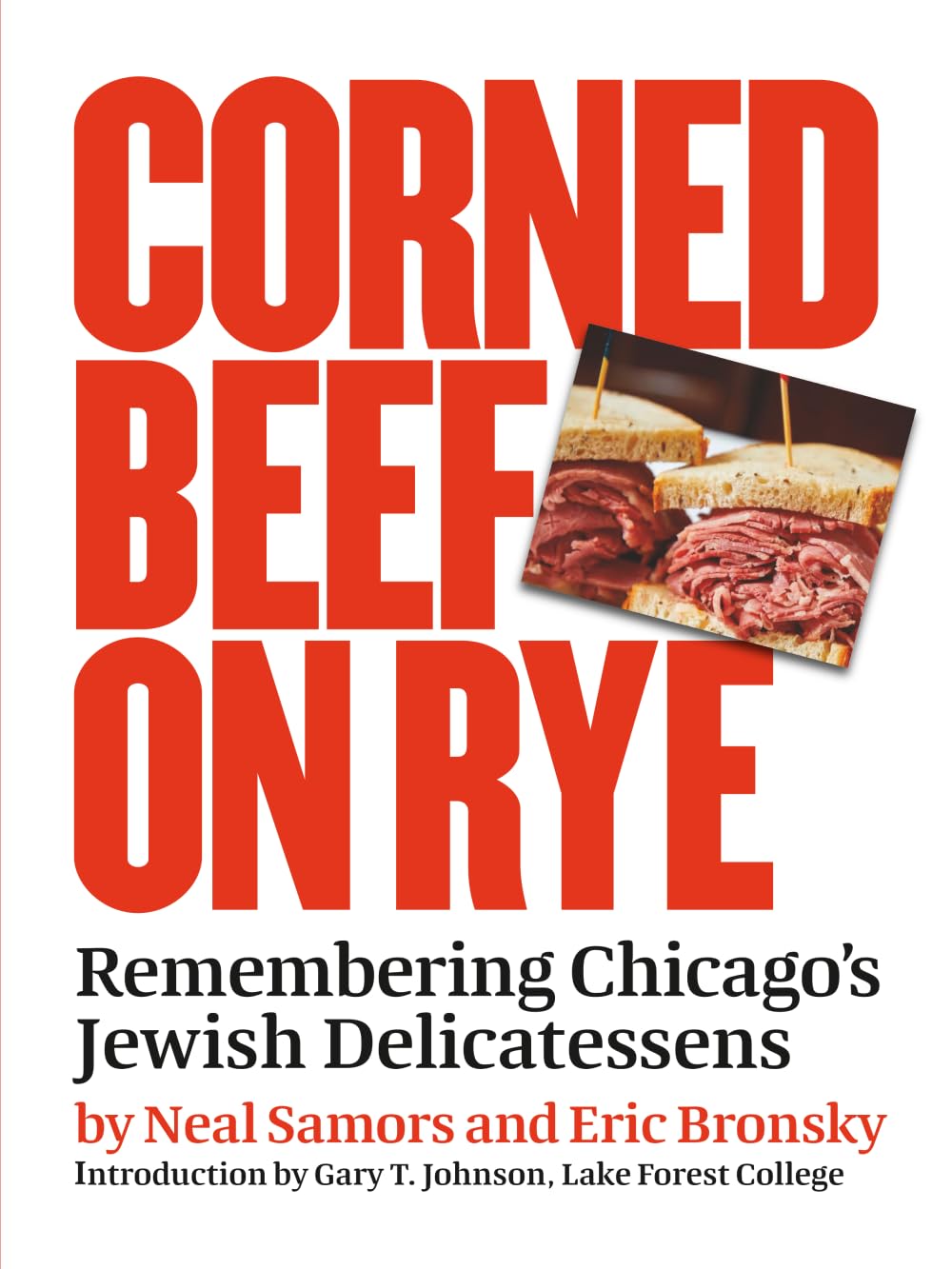
CORNED BEEF ON RYEBy Neal Samors and Eric BronskyChicago's Neighborhoods, Incorporated978-0-97886-635-8124pp/$30.00/March 2026 |
|
Reviewed by Steven H Silver
In 2015, Ted Merwin wrote a book about New York deli history called Pastrami on Rye. Inspired by that book, as well as the museum exhibit "I'll Have What She's Having," which was staged at the Illinois Holocaust Museum from 2023 to 2024, authors Neal Samors and Eric Bronsky have provided a look at Chicago's deli history in Corned Beef on Rye, as Betty Dworkin notes in the book, "Chicago is a corned beef town. New York is a pastrami town. Samors and Bronsky divide the book into three parts, the first looks at the history of delis in Chicago, the second looks at the current deli scene, and finally they attempt to define what sets the Chicago deli apart from the New York deli (and why they shouldn't be compared to each other).The book opens with a definition of what a deli is, tinted by what a Chicago deli is, but mostly focused on generic delis. The authors provide a glimpse at some of the delis that existed in Chicago during the first three quarters of the twentieth century, along with color reproductions of delis, owners, and food, bringing these defunct restaurants to life. These pictures are well captioned and help distinguish the delis, which often seem similar through their descriptions. Chicago is a food town and one joke is that every corner has multiple hot dog stands but the one I go to is the best even though they all serve the exact same food. The descriptions of the delis in this section given the same feeling that the best one to go to is a matter of location and personal preference, but no real distinction.
The second part of the book is a look at the current deli scene in Chicago (and suburbs), filled with interviews by deli owners, like Adam Dlatt of Once Upon a Bagel, Marvin Barsky of The Bagel, and Larry Levy of D.B. Kaplan's. These interviews allow the people who run the delis describe what they are trying to do, why they believe delis are important, and try to separate their delis from the rest of the pack. The authors also include interviews with reporters, like Bob Sirott and Steve Dolinsky, who dine at delis and have a customer's or critic's view of the delis. However thorough Samors and Bronsky tried to be, it was inevitable that they miss some delis. Although they comment that "Anyone [from Highland Park] wanting to dine in a deli had to hop on the Edens Expressway and head to Skokie. Finally in 1986, Max & Benny's opened in nearby Northbrook." However, in the early 1980s, Toojay's Deli served Highland Park resident essentially where Max's Deli currently exists. I worked at Toojay's as a waiter in the 80s. At the same time, it was interesting to see how many of the delis they discuss I've eaten at, both in the city and in the suburbs.
In his interview, Marvin Barsky talks about how the Chicago deli is a dying breed, but he is also an indication that there is a vibrant deli scene. He discusses his desire to reopen The Bagel in Old Orchard, which closed in 2018 after being at the Skokie mall for over thirty years, and lamented that it hasn't happened yet. However, within two months of the book's publication, Barsky announced that The Bagel would be reopened in the suburbs, and although it wouldn't reopen in Old Orchard, it would be reopening in Glenview, less than four miles away.
The book ends on a strong note, where Samors and Bronsky include brief interviews with Chicago deli owners that attempt to explain what makes Chicago delis unique. This is, perhaps, undermined by the fact that the section opens with a lengthy diatribe by transplanted New Yorker Ina Pinkney that explains why Chicago delis are inferior, although nearly everything she sees as lacking in Chicago delis are things that the owners feel make Chicago delis unique.
In the end, the book leaves the reader wanting more. There is no index or even a listing of the delis that have existed in Chicago in the book, nor any maps to show where the delis were clustered. Their attempt to distinguish the differences between the delis never really works, so while some have noticeable differences, such as Manny's or D.B. Kaplan's, many of them tend to run together, even if the actual experience of eating at Max & Benny's, Max's, and Once Upon a Bagel are very different in reality.
At its best, Corned Beef on Rye provides a nostalgic look at the delis of yesteryear and a guide to the delis of today, allowing the reader to create their own checklist of places to try. At the same time, unlike the delis that serve enormous portions of corned beef, huge pickles, and a bowl of matzah ball soup you can swim in, the book leaves the reader hungry for more.
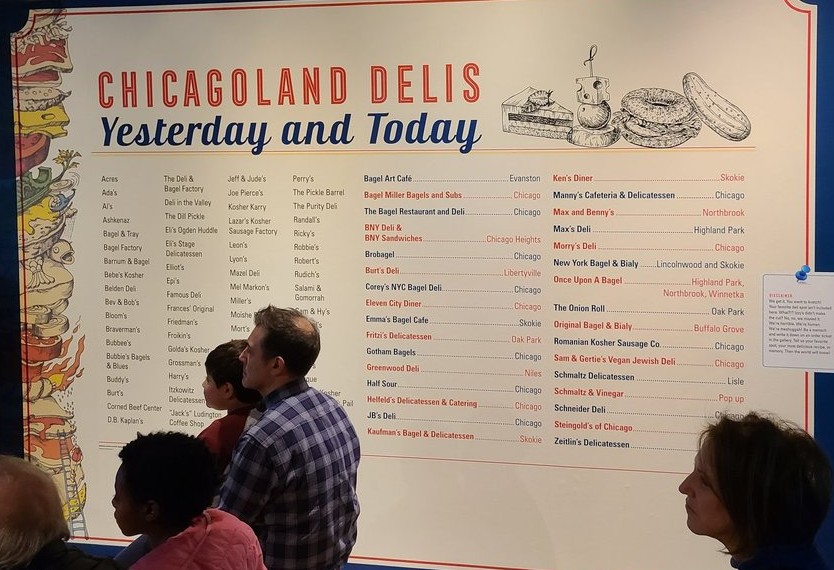
A listing of Chicagoland delis from the "I'll Have What She's Having" exhibit.
| Purchase this book |
|
|
Paperback |